

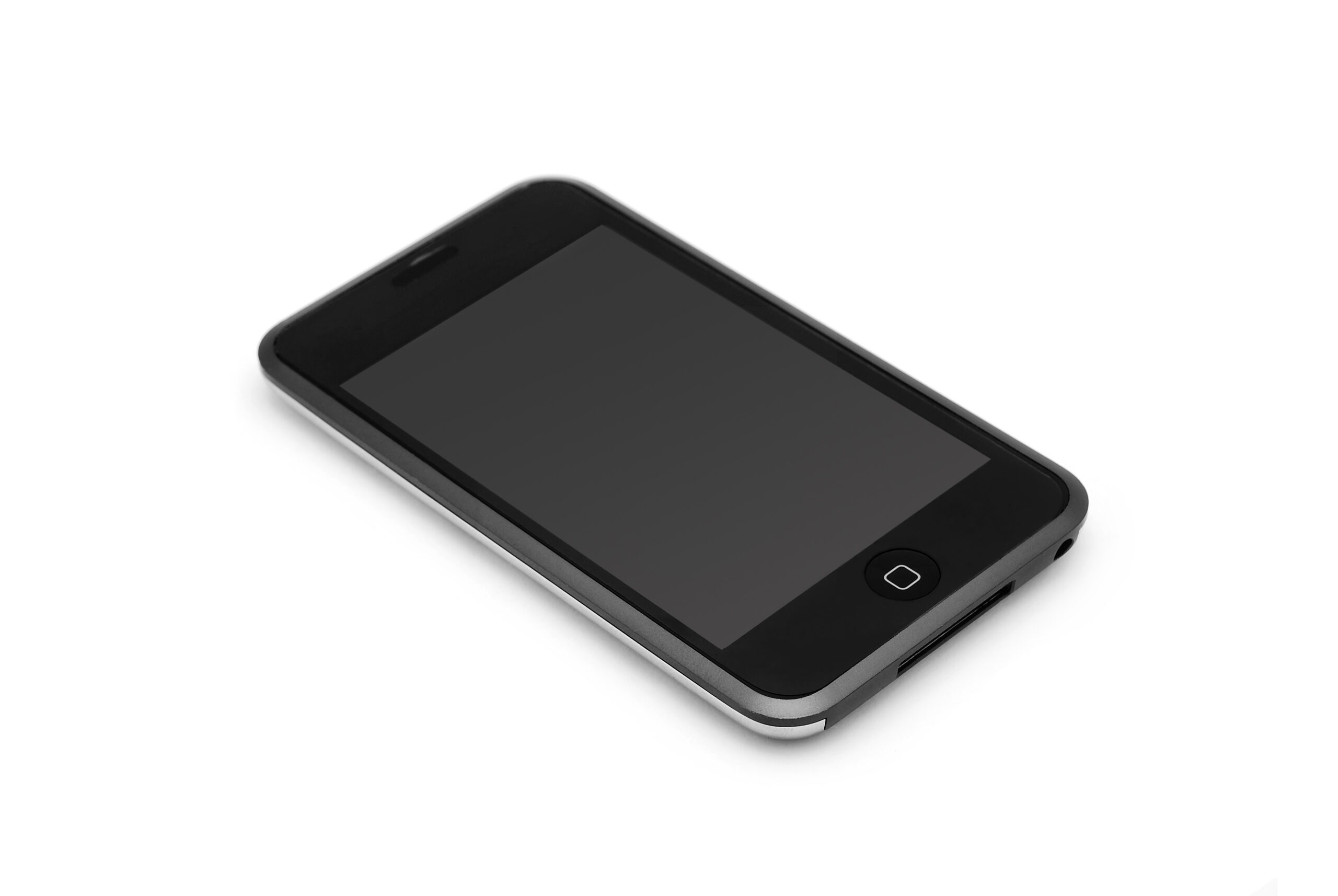
One of the most widely used smartphones worldwide is now the iPhone. Today, Apple offers different iPhone models with advanced cameras, powerful processors, large displays, and features that were difficult to imagine when the first iPhone arrived.
But have you ever wondered how much the first iPhone actually cost?
Apple first unveiled the original iPhone in January 2007, and on June 29, 2007, it went on sale in the US. At the time, it was considered a major change in the mobile phone market. For Apple fans in Kenya, looking back at its original price also shows just how much smartphones have changed over the years.
When Was the First iPhone Released?
Apple introduced the first iPhone on January 9, 2007, during Macworld in San Francisco. Steve Jobs presented it as a device that combined a mobile phone, an iPod, and an internet communication device.
Instead of using a traditional physical keyboard, the iPhone featured a large touchscreen that users could control with their fingers. It also included a web browser, email, maps, music, and other features.
The original iPhone officially went on sale in the United States on June 29, 2007. Apple initially planned to offer it in two storage options: 4GB and 8GB.
How Much Did the First iPhone Cost?
When the original iPhone launched, Apple priced it at:
- 4GB iPhone – $499
- 8GB iPhone – $599
These were the official U.S. prices announced by Apple. The phone was sold through Apple and Cingular, which later became part of AT&T. Customers also needed a compatible service plan with a two-year agreement.
The $599 price for the 8GB model may not sound extremely high compared with some modern flagship smartphones. However, remember that this was in 2007, and the original iPhone was entering a market where smartphones were still very different from what we use today.
The iPhone was also more expensive than many regular mobile phones available at that time.
What Did You Get for $499 or $599?
The first iPhone was very different from today’s iPhones.
It featured a 3.5-inch display, a touchscreen interface, internet connectivity, an iPod-style music experience, and a 2-megapixel camera. It supported GSM, EDGE, Wi-Fi, and Bluetooth.
Apple’s idea was to put several devices into one product. Steve Jobs described it as a combination of a mobile phone, a widescreen iPod, and an internet communication device.
There was no App Store when the original iPhone launched. That means users could not download thousands of third-party apps like they can today. The App Store arrived later with the iPhone software ecosystem.
For its time, however, the touchscreen experience was one of the phone’s biggest attractions.
Was the First iPhone Available in Kenya?
The original iPhone was not initially launched in Kenya as an official Apple retail product.
Apple’s first launch was focused on the United States. The company later expanded the iPhone into other markets. Apple stated in January 2007 that the iPhone would reach Europe in late 2007 and Asia in 2008.
Because of this, Kenyan customers interested in the first iPhone generally had to look at international or imported devices rather than simply walking into an official local Apple store and buying one at the U.S. launch price.
This is an important point when comparing the first iPhone price with iPhone prices in Kenya. The original $499 or $599 figure was the U.S. launch price, not necessarily the amount a Kenyan buyer would have paid after shipping, taxes, import costs, retailer margins, and other expenses.
Why Was the First iPhone So Important?
The first iPhone was important because it changed people’s expectations of what a mobile phone could do.
Before the iPhone, mobile phones with internet access, cameras, music players, and email already existed. However, Apple brought these features together with a touchscreen interface that was simple and easy to understand.
The original iPhone also introduced features such as visual voicemail. Visual voicemail, according to Apple, allows customers to view their voicemails and select which ones to listen to rather of listening to them sequentially.
The device also had a 3.5-inch screen and supported multi-touch controls. Users could interact with content directly on the screen by tapping and swiping.
These ideas helped establish many of the smartphone habits that are normal today.
The First iPhone Price Did Not Stay the Same
Interestingly, the original launch price changed only a few months after release.
In September 2007, Apple reduced the price of the popular 8GB iPhone from $599 to $399. Apple said the lower price was intended to make the device more affordable during the holiday season.
That means the original $599 price was not the final price for the 8GB model during its time on the market.
Apple also eventually discontinued the 4GB version as the company moved forward with newer models and storage options.
By February 2008, Apple introduced a 16GB iPhone for $499, while the 8GB version was available for $399.
This shows how quickly Apple’s smartphone lineup began changing after the first iPhone.
How Does the First iPhone Compare With Today’s iPhones?
The difference between the first iPhone and modern iPhones is huge.
The original iPhone had only a 2-megapixel camera, limited storage, a small 3.5-inch display, and no App Store. Modern iPhones offer much more powerful processors, advanced camera systems, high-resolution displays, large storage options, 5G connectivity, Face ID or other advanced security features, and access to millions of apps and services.
Because cellphones have become an integral part of daily life, this contrast is especially intriguing to Kenyan Apple enthusiasts. People now use their phones for mobile banking, social media, online shopping, work, photography, video, navigation, entertainment, and communication.
The first iPhone was only the beginning of that journey.
What Would $599 Mean for a Kenyan Buyer?
It is important not to directly convert the original $599 into a current Kenyan price and assume that would be the actual cost of the phone in Kenya.
Currency exchange rates change over time, and the Kenyan retail price of an imported phone can also include taxes, shipping, distributor costs, and retailer profit.
So, when researching the first iPhone price, the most accurate statement is that Apple’s official U.S. launch price for the 8GB original iPhone was $599.
For someone in Kenya today, the more interesting question may be how that historical price compares with the cost of modern iPhones available in the Kenyan market.
Why Do People Still Talk About the Original iPhone?
More than a decade after its launch, the original iPhone remains an important part of smartphone history.
It was not the first phone with a camera, internet access, or a touchscreen. Instead, its importance came from how Apple combined different technologies into one product and presented them through a simple interface.
For Apple fans, the original iPhone represents the beginning of the modern iPhone era.
From the first 4GB and 8GB models to today’s powerful iPhones, Apple’s smartphone lineup has gone through major changes. Storage has increased, cameras have improved, screens have become larger and sharper, and mobile connectivity has become much faster.
Conclusion
So, what was the first iPhone price?
The original iPhone launched in the United States in June 2007 at $499 for the 4GB model and $599 for the 8GB model.
It’s important for Kenyan Apple enthusiasts to keep in mind that these were American launch prices. The actual cost for a Kenyan buyer could have been different because of international availability, shipping, taxes, import expenses, and retailer pricing. Looking back, the original iPhone may seem basic compared with today’s smartphones. But its touchscreen interface, internet features, iPod capabilities, and simple design helped change the mobile phone industry forever.
What started with a $499 entry-level iPhone in 2007 eventually grew into one of the world’s best-known smartphone families. For anyone interested in Apple’s history, the first iPhone remains a fascinating reminder of just how quickly mobile technology has evolved.