

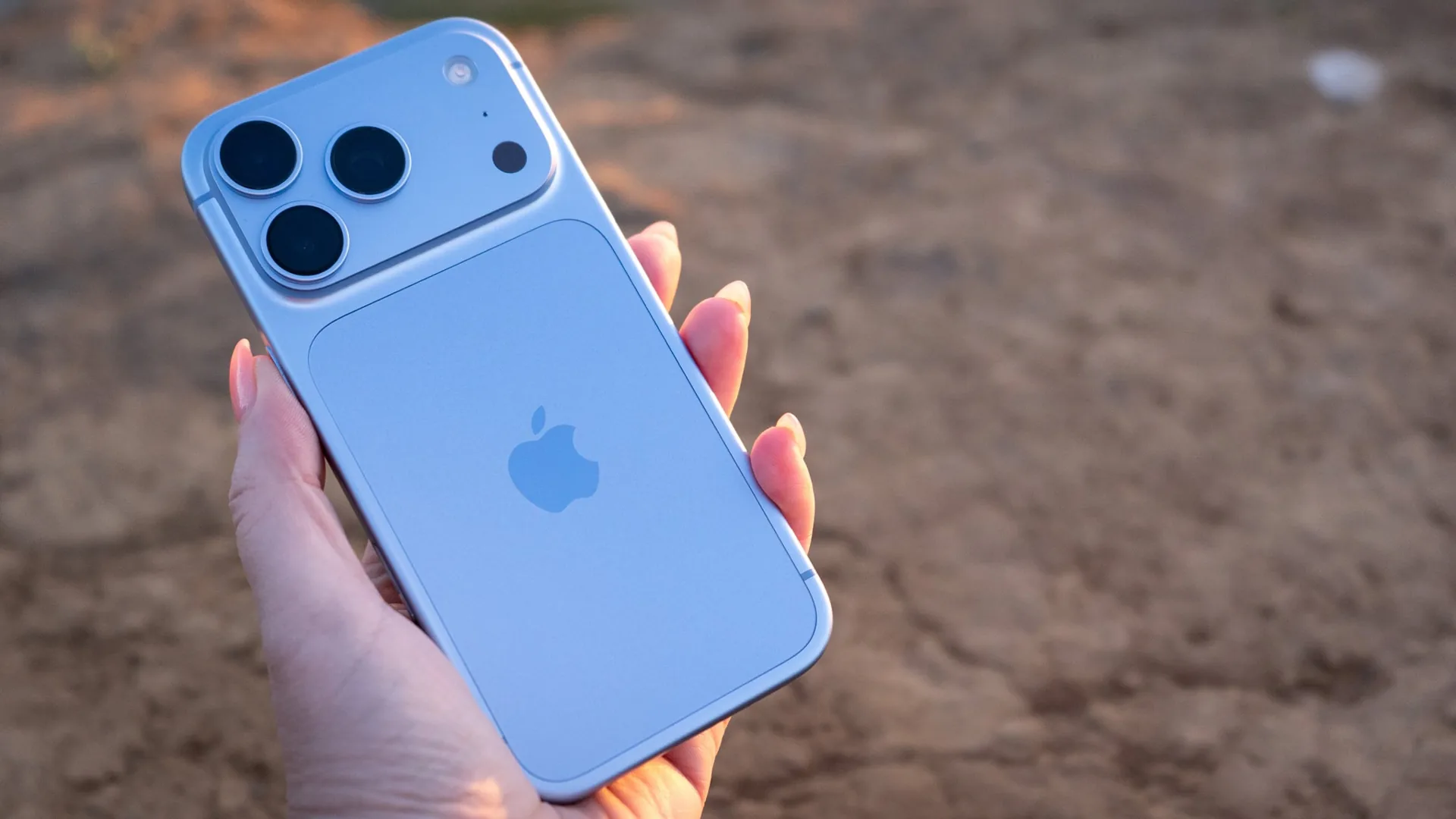
Apple has officially unveiled the iPhone 18 Pro and iPhone 18 Pro Max, and this year’s launch is more than just a small refresh. From a smarter camera to a completely rebuilt Siri, the new Pro lineup brings genuinely useful changes for everyday users, photographers, and power users alike. Here’s a breakdown of everything new.
A Camera That Finally Understands Light Like a Real Camera
The biggest talking point this year is the camera. Apple has added a variable aperture to the 48MP Main camera for the first time ever on an iPhone. In simple words, this means the camera can now physically open up wider to let in more light in dark settings, or close down to keep more of a scene in sharp focus, something that used to require a proper camera with interchangeable lenses.
Six tiny laser-cut blades inside the camera smoothly shift between aperture settings, automatically adjusting for lighting and depth of field as you shoot. Paired with a new sensor and an upgraded computational imaging pipeline, this should translate into noticeably better low-light shots and crisper detail, especially at the back of group photos. For people who just want to point and shoot, the phone handles all of this on its own. But for anyone who likes to get hands-on, the aperture can also be adjusted manually across four settings right in the Camera app, and Apple is even giving developers an API so third-party apps can tap into this control too.
Alongside the new sensor, Apple has introduced Pro controls, a redesigned camera interface that puts manual settings front and center. Users can now adjust shutter speed, white balance, and aperture, or check their exposure with a live histogram. Video shooters get some love too; you can apply Cinematic depth-of-field effects after you’ve already filmed a clip (at up to 60fps), Time-lapse mode now supports full 4K with Dolby Vision HDR, and the Audio Mix feature can isolate music from background noise and voices.
Proving a Photo Is Real: Apple Reference Image
In a world increasingly full of AI-edited and AI-generated images, Apple is tackling authenticity head-on with a new feature called Apple Reference Image. When you shoot in the new Reference mode, the camera’s sensor essentially signs every pixel it captures at the moment of the shot, and Apple’s Private Cloud Compute turns that signed data into an unchangeable reference copy of the photo. You can then pull up this reference image inside the Photos app right next to your edited version almost like a digital negative to visually compare the two and see exactly what was changed. This is a meaningful tool for photojournalists, professional photographers, and anyone who wants proof that an image hasn’t been tampered with.
A Smarter, More Useful Dynamic Island
The Dynamic Island pill-shaped cutout near the top of the screen has been reworked as well. Thanks to new display technology, it now has room to show three Live Activities at once, while still handling Face ID duties like unlocking the phone, authenticating purchases, and signing into apps. So if you’re tracking a food delivery, a sports score, and a timer all at the same time, you’ll actually be able to glance at all three instead of them getting buried or cycling through one at a time.
Serious Power Under the Hood
Performance takes a big leap this year with the new A20 Pro chip, built on a 2-nanometer manufacturing process. It offers 50 percent more memory bandwidth than last year’s chip, a new 6-core CPU with built-in Neural Accelerators, and a 7-core GPU that’s up to 40 percent faster for gaming and graphics-heavy tasks. On the AI side, the chip now packs a Dual 16-core Neural Engine with 32 total cores, effectively doubling the on-device AI processing power compared to the previous generation.
To keep all that extra power from overheating the phone, Apple redesigned its internal cooling. The new chip packaging places the processor and memory side by side instead of stacked, which keeps heat-sensitive memory away from the hottest part of the chip and allows it to connect directly to a much larger vapor chamber one with three times the surface area of last year’s model. The payoff, according to Apple, is up to a 40 percent improvement in sustained performance, meaning the phone should stay fast for longer during things like extended gaming sessions or video exports instead of slowing down as it heats up.
Connectivity is getting smarter too, with Apple’s new C2 modem. It brings AI-driven improvements to cellular signal quality and reliability, offers noticeably faster upload speeds than before while using less battery, and now supports mmWave 5G in the US for the first time.
Battery Life That Actually Lasts All Day (and Then Some)
Battery life has always been one of the most common complaints about smartphones, and this year Apple appears to be taking it seriously. eSIM-only models are rated for up to 36 hours of video playback on the iPhone 18 Pro and up to 45 hours on the iPhone 18 Pro Max, a substantial jump. Charging speeds have improved too: the iPhone 18 Pro can reach 50 percent battery in around 15 minutes over a wired connection, or 30 minutes wirelessly. The Pro Max is even more impressive on paper, with just five minutes of wired charging reportedly providing around seven hours of video playback.
One neat detail: if you use an eSIM instead of a physical SIM card, you actually get extra battery life. That’s because the space once taken up by the physical SIM tray is now used for additional battery cells, giving eSIM-only models roughly two more hours of video playback than their physical-SIM counterparts.
A Whole New Siri, Powered by AI
Arguably the most exciting change isn’t in the hardware at all it’s the brand-new Siri AI arriving with iOS 27. This is a completely rebuilt version of Siri, powered by Apple Intelligence, and Apple describes it as far more personal, capable, and conversational than anything Siri has offered before. It can draw on personal context to help you quickly find things across your messages, emails, and photos, use onscreen awareness to take action based on whatever is currently on your screen, and answer open-ended questions on virtually any topic.
There’s also a dedicated Siri mode inside the Camera app, letting you simply point your camera at something in the real world and ask Siri about it or have it take action based on what it sees. Writing gets easier too. Instead of typing something out yourself, you can describe what you need and let Siri draft it for you. Photo editing benefits from the AI boost as well, with new tools like Spatial Reframing (to improve a photo’s composition after it’s taken), an upgraded Clean Up tool for removing unwanted objects, and a more photorealistic Image Playground for generating images.
Privacy remains a big part of Apple’s pitch here. Much of this AI processing happens directly on the device, and anything that needs extra computing power is handled through Private Cloud Compute, which is designed to extend the same privacy protections from your iPhone into the cloud. It’s also worth knowing that Siri AI is rolling out gradually; it launches as a beta in English with iOS 27, with French, Japanese, Korean, Portuguese, and Spanish support expected in October, and it won’t be available in the EU right away.
New Colors and a Greener Build
On the design front, the new phones come in four finishes: black, silver, glacier, and an all-new burgundy shade. Apple has also leaned further into sustainability, with both models made using 40 percent recycled content overall, including fully recycled cobalt in the battery and mostly recycled aluminum in the enclosure.
Pricing and When You Can Get One
If you’re thinking about upgrading, here’s the practical rundown. The iPhone 18 Pro starts at $1,199 and the iPhone 18 Pro Max starts at $1,299 in the US, with storage options ranging from 256GB up to 2TB. Pre-orders opened on September 12, with the phones officially going on sale on September 18 in more than 65 countries, followed by another 20 countries on September 25.
Conclusion
The iPhone 18 Pro isn’t a dramatic redesign, but it’s a phone that’s noticeably better in the areas that matter most day to day: photos that look more professional straight out of the camera, a chip that stays fast for longer without overheating, a battery that can genuinely carry you through a demanding day, and an AI assistant that finally feels like it understands context rather than just following commands. For anyone who relies on their phone for photography, creative work, or simply wants a more capable Siri, this year’s Pro lineup looks like a meaningful step forward rather than just another spec bump.