

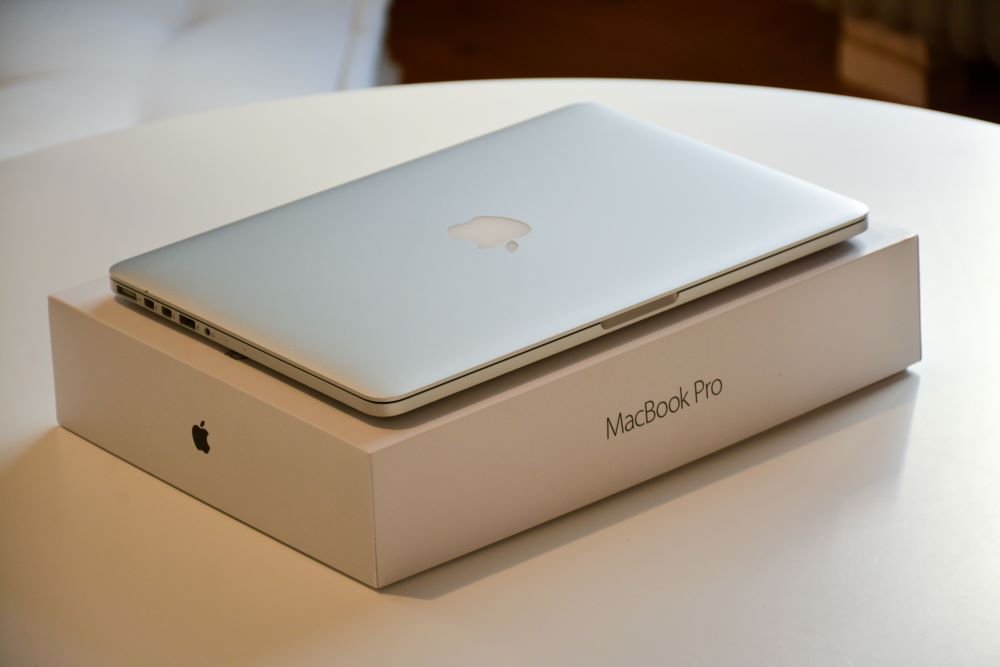
If you’ve ever typed “MacBook price in Kenya” into Google, you probably came away more confused than when you started. One shop says KSh 146,000. Another says KSh 160,000. A third adds “+ VAT” in tiny print. So what’s the real number?
The honest answer is that it depends on the model, the memory, the storage, and where you buy.
The Short Answer
Most people end up paying somewhere between KSh 115,000 and KSh 260,000 for a new MacBook. A basic, slightly older MacBook Air sits at the bottom of that range, while a newer, better-equipped Air or an entry-level Pro sits near the top. If you want a top-spec Pro for video editing or heavy 3D work, the price can climb well past half a million shillings.
Here’s how it breaks down.
MacBook Air Prices in Kenya
The MacBook Air is the one most Kenyans buy. It’s light, quiet, has no fan to whir at you, and the battery lasts a full day of lectures or meetings.
- MacBook Air M5 (13-inch). This is the newest Air. One Nairobi retailer lists it at KES 146,000 for the 16GB/512GB model, with higher configurations reaching about KSh 206,000. Another seller lists the same family at KES 160,000. That KSh 14,000 gap between shops is normal, and it’s a good reason to compare before you pay.
- MacBook Air M5 (15-inch). If you want a bigger screen for spreadsheets or editing, expect KSh 185,000 to KSh 212,000, and the listing notes VAT on top.
- Older Airs (M2, M3, M4). This is where the real savings are. A recent price guide puts the M2 Air at roughly KSh 113,000 to KSh 150,000, and the M3 Air at around KSh 142,000 to KSh 203,000, depending on storage and memory. For a student or a writer who mostly lives in a browser and Google Docs, an M2 or M3 is plenty. You don’t need the newest chip to write assignments or run a small business.
MacBook Pro Prices in Kenya
The Pro line is built for people whose laptops work hard: video editors, music producers, developers, architects.
- MacBook Pro 14-inch (M4). The same guide lists these at about KSh 243,000 to KSh 265,000 or more for 16GB/512GB versions. That’s a big step up from an Air, and the extra money buys you a brighter screen, more ports, and better sustained performance.
- MacBook Pro 16-inch. The larger models in the M4 generation were listed at roughly KSh 315,000 to KSh 360,000 and above. High-end Max configurations can run past KSh 430,000.
- The top of the line. The newest 16-inch Pro with the M5 Max chip is listed by one Nairobi dealer at KSh 665,000 plus VAT. That’s a serious professional machine, and honestly, most people don’t need it.
Why Prices Differ From Shop to Shop
You’ll notice the same laptop doesn’t cost the same everywhere. A few things explain that.
- VAT and import costs. Some sellers quote prices without VAT and add it at checkout. Always ask whether the price is final. I’ve seen people budget KSh 160,000 and then find the real bill is closer to KSh 185,000.
- The exchange rate. Apple prices in dollars. When the shilling weakens, laptop prices creep up, sometimes within weeks.
- Configuration. “MacBook Air M5” isn’t one product. A 16GB/512GB model and a 24GB/1TB model can differ by tens of thousands of shillings. Check the memory and storage before you compare prices.
- Stock and timing. A shop that’s just received a shipment may price differently from one clearing older stock. Newly launched models usually cost more, and older ones get cheaper once the next generation arrives.
- Where it came from. This matters a lot, and I’ll come back to it below.
Should You Buy Abroad Instead?
It’s tempting. Some international price comparisons show the same MacBook costing less in places like Thailand, Japan, Australia or the US. For example, one comparison puts a 13-inch M5 Air with 16GB/1TB at about KSh 199,897 in Thailand and KSh 223,256 in the United States.
But the sticker price isn’t the full story. You’ll want to think about:
- Warranty. Apple’s warranty generally works best in the country of purchase, though some repairs are honored elsewhere. Check before you assume.
- Import duty. Bringing a laptop through customs can add costs, especially if it looks like you’re importing for resale.
- Keyboard layout and charger. Some models differ by region. A US keyboard is usually fine, but a different plug can be annoying.
- Travel costs. If you’re not already travelling, any saving may disappear fast.
If a friend or relative is already flying home, buying abroad can work. Otherwise, a local purchase with a proper receipt and local after-sales support is usually the less stressful path.
New, Refurbished, or Used?
- New is the safest option. You get a full warranty, a fresh battery, and no surprises. If you can stretch to it, I’d recommend it.
- Refurbished can be a smart middle ground, but only from a seller you trust. Ask for the battery cycle count, the warranty terms, and whether any parts were replaced.
- Used is where people get burned. A cheap MacBook with an iCloud lock or Activation Lock is a very expensive paperweight. Before paying, ask the seller to sign out of their Apple ID in front of you, and check the serial number on Apple’s coverage page. Never buy from someone who can’t or won’t do this.
Which MacBook Is Right for You?
Forget the specs for a second and think about your actual life.
- If you’re a student or doing office work, a MacBook Air M2 or M3 is the sweet spot. It handles everything you’ll throw at it and costs far less than the newest model.
- If you want something that will last 6 to 8 years, the M5 Air with 16GB of memory is a good buy. Memory can’t be upgraded later, so don’t skimp on it if you plan to keep the laptop a long time.
- If you edit video, produce music, or run heavy software, look at a MacBook Pro. The M4 Pro 14-inch is plenty for most freelancers.
- If you’re a casual user who just wants “a nice laptop,” please don’t buy a Pro. You’d be paying for power you’ll never feel.
A Few Tips Before You Pay
- Compare at least three sellers. The price gap can be big for the exact same model.
- Ask if VAT is included. Get the final figure in writing.
- Check the warranty. Make sure it’s a local warranty, and register your device with Apple yourself.
- Get a proper receipt. You’ll need it if anything goes wrong.
- Ask about payment plans. Some Kenyan retailers offer installments, which can make a KSh 150,000 laptop easier to manage. Just read the total cost carefully.
- Don’t chase the newest chip. Last year’s model is often the best value.
Conclusion
So, how much is a MacBook in Kenya? For most buyers, expect roughly KSh 115,000 to KSh 210,000 for an Air, KSh 240,000 to KSh 360,000 for a Pro, and much more if you want the very top configuration. Prices move with the exchange rate and from shop to shop, so treat every figure here as a guide, not a final quote.
The smartest move is to decide what you actually need, set a budget with some room for VAT, and then shop around. A MacBook is a big purchase, but a good